How to Attract Birds to a New Feeder (and Get Them on Camera)
Our top picks
 Free AI ID tells you who's arriving: 1.5 L hopper, solar panel included, about $130Birdfy Feeder 2 (Solar)1080p · Free AI ID · Solar panel included7.8Price tier: Mid-rangeCheck price on Amazon
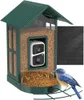 Big 2.7 L hopper keeps seed out longer between refills, about $59Soliom BF08 2K Smart Bird Feeder (Solar)2K · AI terms unclear · Solar panel included7.1Price tier: BudgetCheck price
 Birdsong ID with Premium helps you learn who's calling nearby, about $199 at Bird BuddyBirdbuddy Home (Bird Buddy 2)2K · AI ID needs a plan · Built-in solar roof8.1Price tier: PremiumCheck price
You’ve unboxed a smart bird feeder, mounted it, paired it and filled it. The app shows a crisp, empty perch. Day two: still empty. It’s the most common first-week experience, and it’s almost never the feeder’s fault. Birds need to notice a new food source, decide it’s safe and fit it into their routine.
This guide covers what to put in the feeder, where to put it and how to speed things up. We haven’t tested these feeders ourselves; the birding advice comes from the Cornell Lab’s Project FeederWatch and All About Birds, and where a test result appears, we name the outlet.
Step 1: offer the food most birds want
Project FeederWatch is clear on the starting point: black-oil sunflower is the most common feeder seed in North America. It’s high in energy, its thin shells are easy for small birds to open, and it’s a favorite of cardinals, chickadees, finches and sparrows. If you only buy one bag, buy this one, such as Wagner’s 25 lb black-oil sunflower.
Avoid the cheapest mixed bags. FeederWatch notes that milo, the round reddish grain that bulks up budget mixes, isn’t a favorite of most birds and often goes to waste, especially in the East. Wasted seed on a camera feeder’s tray also means a messier frame and more cleaning.
Once birds are coming, you can add variety to bring new species. Our bird seed guide covers sunflower hearts, safflower, nyjer, suet, mealworms and millet, and the Which birds will I attract? tool shows likely visitors for your region and season.
| Food | Typical visitors | Feeder |
|---|---|---|
| Black-oil sunflower | American Goldfinch, Black-capped Chickadee, Blue Jay, California Scrub-Jay, Carolina Chickadee, Dark-eyed Junco, Downy Woodpecker | Any seed camera feeder (hopper or tray) |
| Nyjer (thistle) | American Goldfinch, House Finch, Lesser Goldfinch, Pine Siskin, Indigo Bunting | A feeder with very small ports or fine mesh; most open-tray camera feeders spill it |
| Safflower | Blue Jay, Downy Woodpecker, House Finch, Mourning Dove, Northern Cardinal, Red-bellied Woodpecker, Tufted Titmouse | Any seed camera feeder |
| Suet | Black-capped Chickadee, Blue Jay, California Scrub-Jay, Carolina Chickadee, Carolina Wren, Downy Woodpecker, Gila Woodpecker | A suet cage or a camera feeder with a suet holder or suet-ball add-on |
| Sugar-water nectar | Anna's Hummingbird, Black-chinned Hummingbird, Broad-tailed Hummingbird, Gila Woodpecker, Ruby-throated Hummingbird, Costa's Hummingbird, Rufous Hummingbird | A hummingbird (nectar) camera feeder |
| Mealworms | Black-capped Chickadee, Carolina Chickadee, Carolina Wren, Mountain Chickadee, Tufted Titmouse, White-breasted Nuthatch, Eastern Bluebird | An open tray or dish; dried mealworms work in most tray-style camera feeders |
| White proso millet | Dark-eyed Junco, House Finch, Mourning Dove, Northern Cardinal, Chipping Sparrow, Eastern Towhee, Song Sparrow | Low trays and the ground below the feeder; camera trays catch some |
Get the list for your region and season in the Which birds will I attract? tool.
Step 2: put it where birds feel safe
A feeder in the middle of an open lawn, or beside a busy door, makes small birds nervous. Project FeederWatch recommends a quiet spot close to natural cover, ideally evergreens, where birds can wait their turn and escape predators. But not too close: about 10 feet from branches keeps squirrels and cats from using them as a launch pad.
Two more placement rules from Cornell: keep the feeder within 3 feet of a window or more than 30 feet away to reduce collisions, and put it where you can refill it easily. A camera feeder also needs Wi-Fi signal and sun for its panel. Our placement guide walks through all of it.
Step 3: make the feeder easy to notice
Birds find food largely by watching other birds. A few tricks help the first ones discover a new feeder:
- Fill it to the brim so seed is visible at the front, right in front of the lens.
- Scatter a small handful of seed on the tray and on the ground underneath for the first few days. Ground feeders such as juncos, sparrows and doves often find food there first; FeederWatch notes many sparrows rarely land on feeders at all.
- Hang it near where birds already gather, such as a hedge they flit through, while keeping the 10-foot buffer.
- Keep your old feeder up nearby if you’re replacing one. Familiar birds will find the new one faster.
Step 4: add water
Project FeederWatch points out that birds are attracted to water just as much as to food. A shallow bath near the feeder brings birds that don’t eat seed at all, such as robins, and gives seed-eaters another reason to visit. FeederWatch’s tips:
- Change the water often, ideally every day or two.
- Put a few stones or branches in a ground-level bath so birds can stand and drink.
- Dripping water makes a bath much more attractive.
- In freezing climates, a birdbath heater keeps water open. Never add antifreeze.
Bird Buddy’s 3-in-1 Nutrition Set adds a small water fountain and fruit spike in front of its camera, which is a tidy way to get drinking birds on video.
Step 5: be patient (and expect seasons)
There’s no reliable number of days for birds to find a feeder. It depends on local bird numbers, natural food supply and the season. One real-world example: MacRumors put a Birdfy camera bird bath out in December and saw no birds for two months; in spring it became the favorite drinking spot for every creature nearby.
Some seasonal patterns to expect:
- Fall and winter usually bring the busiest seed feeders, as natural food runs low and winter visitors like juncos arrive. See our winter feeding guide.
- Late spring and summer can be quieter at seed feeders while insects are plentiful, but bring hummingbirds and orioles to nectar.
- Irruption years bring flocks of Pine Siskins or Red-breasted Nuthatches far south in some winters and almost none in others.
Step 6: make the camera’s job easier
Once birds arrive, small changes get them in frame:
- Perch length. Larger birds like cardinals and jays need room. A metal perch extender fits Bird Buddy feeders.
- Seed level. On hoppers where seed doesn’t slide forward on its own (one owner reported this on the Birdfy Feeder 2 Pro), shake or top up so food stays in front of the lens.
- Suet next to the camera. A suet ball holder on a Bird Buddy brings woodpeckers and nuthatches into view.
- Clean the lens. Rain spots and pollen soften every shot.
| Item | Type | Fits | Buy |
|---|---|---|---|
| Morning Song Sunflower Hearts & Chips Wild Bird Seed, 10 lb Hulled sunflower: no shells to clog a camera tray or pile up under the feeder, and small birds eat it faster. Costs more per pound than in-shell seed. | Seed | Any feeder (Keep it dry; FeederWatch notes hulled seed spoils faster than seed in the shell.) | Check price |
| Pennington Select Safflower Seed, 15 lb Cardinals, titmice and doves take it; squirrels and grackles mostly don't. A good switch when the feeder is being raided. | Seed | Any feeder | Check price |
| Wagner's 76027 Black Oil Sunflower Wild Bird Food, 25 lb The one seed nearly every feeder bird eats. Buying 25 lb at a time keeps the cost per pound low, and over 13,000 Amazon ratings say the bags are consistent. | Seed | Any feeder | Check price |
| Wagner's 62050 Nyjer Seed Wild Bird Food, 10 lb The goldfinch and siskin seed. | Seed | Any feeder (Nyjer is tiny and spills from most open-tray camera feeders. Use it in a separate small-port finch feeder placed in view of the camera, or a hopper with fine ports.) | Check price |
| C&S Hot Pepper Delight No-Melt Suet Dough No-melt suet for warm months, with hot pepper that squirrels tend to leave alone while birds eat it normally. | Suet | Any feeder | Check price |
| Heath DD4-10 All Season High Energy Suet Cakes (10-pack) Woodpeckers, nuthatches, chickadees and wrens. Put a suet cage next to a seed camera feeder, or use a suet-ball holder where the feeder supports one. | Suet | Any feeder | Check price |
| I LOVE WORMS Dried Mealworms, 5 lb The bluebird magnet, and a favorite of wrens, chickadees and robins. A small handful in a tray-style camera feeder brings species that ignore seed. | Mealworms | Any feeder | Check price |
Step 7: keep them coming back
A feeder that runs empty for a week teaches birds to look elsewhere. Small hoppers need the most attention: the Birdbuddy Pro Solar and Nook hold 0.9 L, while the Soliom BF08 holds 2.7 L and the Perky-Pet 3.2 L.
Keep it clean, too. Project FeederWatch recommends washing seed feeders every week or two (more in wet weather or heavy use), raking up hulls and droppings underneath, and cleaning nectar feeders every couple of days. Sick birds at a dirty feeder are bad for the birds and for your footage.
Step 8: plant for birds
Feeders are only part of the picture. FeederWatch’s Garden for Birds advice is that native plants are one of the best ways to support local birds: they provide shelter, nesting spots and the insects that most songbirds feed their young. Even a few native shrubs near the feeder add cover and bring more species.
Use the app to learn who’s visiting
Once birds arrive, the camera becomes a learning tool. Free AI species ID on Birdfy feeders, or Premium ID on Bird Buddy, names visitors automatically; MacRumors’ and The Gadgeteer’s testing found it right most of the time on common birds and shakier on juveniles and partial views. Use it as a prompt, then confirm with a field guide or Cornell’s All About Birds species pages. Knowing who’s visiting tells you what to add next: woodpeckers mean suet will pay off, a bluebird glimpse means mealworms are worth trying. Our explainer on how smart feeder AI identification works covers its limits.
Still seeing nothing?
| Problem | Try this |
|---|---|
| No visitors after a week | Move closer to cover (about 10 ft), switch to black-oil sunflower, scatter a little seed below |
| Only House Sparrows and starlings | Drop millet and bread-like mixes; offer sunflower or safflower |
| Squirrels got there first | Pole and baffle; see squirrel-proof camera feeders |
| Birds visit but the app misses them | Check motion sensitivity, battery and Wi-Fi; see how AI ID works |
Choosing a feeder that suits your yard? The feeder matcher and our best bird feeder cameras of 2026 are good next stops.
Frequently asked questions
How long does it take birds to find a new feeder?
What seed attracts the most birds?
Why are birds ignoring my smart bird feeder?
Does a bird bath help attract birds to a feeder?
How do I get birds to land where the camera can see them?
Sources
- Project FeederWatch: Feeding Birds (food types, feeder types, water, placement) · checked 2026-11-12 — Black-oil sunflower is the most common feeder seed and preferred by a wide variety of birds; milo is not a favorite of most birds; birds are attracted to water and dripping water makes a bath more attractive.
- Project FeederWatch: Feeder placement · checked 2026-11-12 — Place feeders in a quiet area near natural cover such as evergreens, about 10 feet from branches squirrels and cats can jump from.
- Project FeederWatch: Gardening for Birds · checked 2026-11-12 — Planting native vegetation is one of the best ways to support local birds.
- MacRumors: Birdfy Bird Bath Pro, Birdfy Feeder and Feeder 2 Duo review · checked 2026-11-12 — The Bird Bath Pro had no bird visits for its first two months outside in winter, then became a wildlife favorite in spring.
- All About Birds (Cornell Lab): Northern Cardinal overview · checked 2026-11-12 — Nearly any feeder attracts cardinals within their range, especially with sunflower seed; safflower has limited appeal for squirrels.
Get new guides by e-mail
One short e-mail when Bird Feeder Camera Guide publishes a new guide. No spam, no sharing your address, and you can unsubscribe in one click.